
The Chicken-Egg Farm That Planted Churches
When David moved his family to a Muslim country, they settled in a village without running water. Their neighbors wondered how this American family made a living without farming or raising goats. Were they missionaries or spies? Suspicion kept people at a distance.
Then David started a chicken-egg farm. It provided his family with a legitimate livelihood and, more importantly, daily opportunities to connect with the community. As the business grew, relationships opened doors for the gospel—and a faith community took root.
Over time, David observed that a major barrier to the gospel among Muslims is the perception that local pastors live well without working because they are paid by foreigners to spread a Western religion, thereby betraying their culture. His business hired a few pastors as chicken-feed distributors, giving them respectable status as they traveled to different villages to plant churches. In 30 years, it became one of the country’s largest agricultural companies
What if your career could do more than pay the bills? What if it could open doors for the gospel?

The Urgent Call For Bi-vocational Workers
Today, the 10/40 Window is home to two-thirds of the world’s population and 90% of the world’s unreached peoples. Political and religious barriers prevent traditional missionaries from entering many of these countries. However, many doors are open to professionals in business, technology, healthcare, education, and other fields who contribute to the local economy.
This is where tentmaking comes in: using a profession to support yourself while living out your faith and making disciples. Local pastors can also benefit from being bi-vocational. This is an urgent call for the global church.
An Old Idea for a New Generation
Tentmaking is not a modern invention. The Apostle Paul made tents to support himself in Thessalonica, Corinth, and Ephesus throughout his missionary journeys.
In the 18th century, Moravian missionaries went out as artisans and tradespeople. They shared the gospel while teaching practical skills, bringing spiritual and economic transformation to local communities.
William Carey, the Father of Modern Missions, taught Bengali to British officers at Fort William College for more than 30 years. His income supported his family and funded Bible translation, church planting, educational initiatives, and social reform.
These pioneers remind us that a career and a mission calling need not compete. Your profession can be an integral part of your mission.
Are Tentmakers Second-Class Missionaries?
For the past 300 years, Protestant missions have largely been led by full-time missionaries, with doors wide open when the world was under the influence of Western powers. As a result, tentmaking is unfamiliar to many Christians.
The questions are understandable: Is tentmaking “real missions”? Can someone working 40–50 hours a week have time for ministry? Are tentmakers at best part-time and therefore second-class missionaries?
These questions reveal deeper issues: How do we define meaningful work? Is work a calling from God? Can our careers advance His mission? What does it mean to embody the gospel?
Temporal or Eternal? Intrinsic or Instrumental?
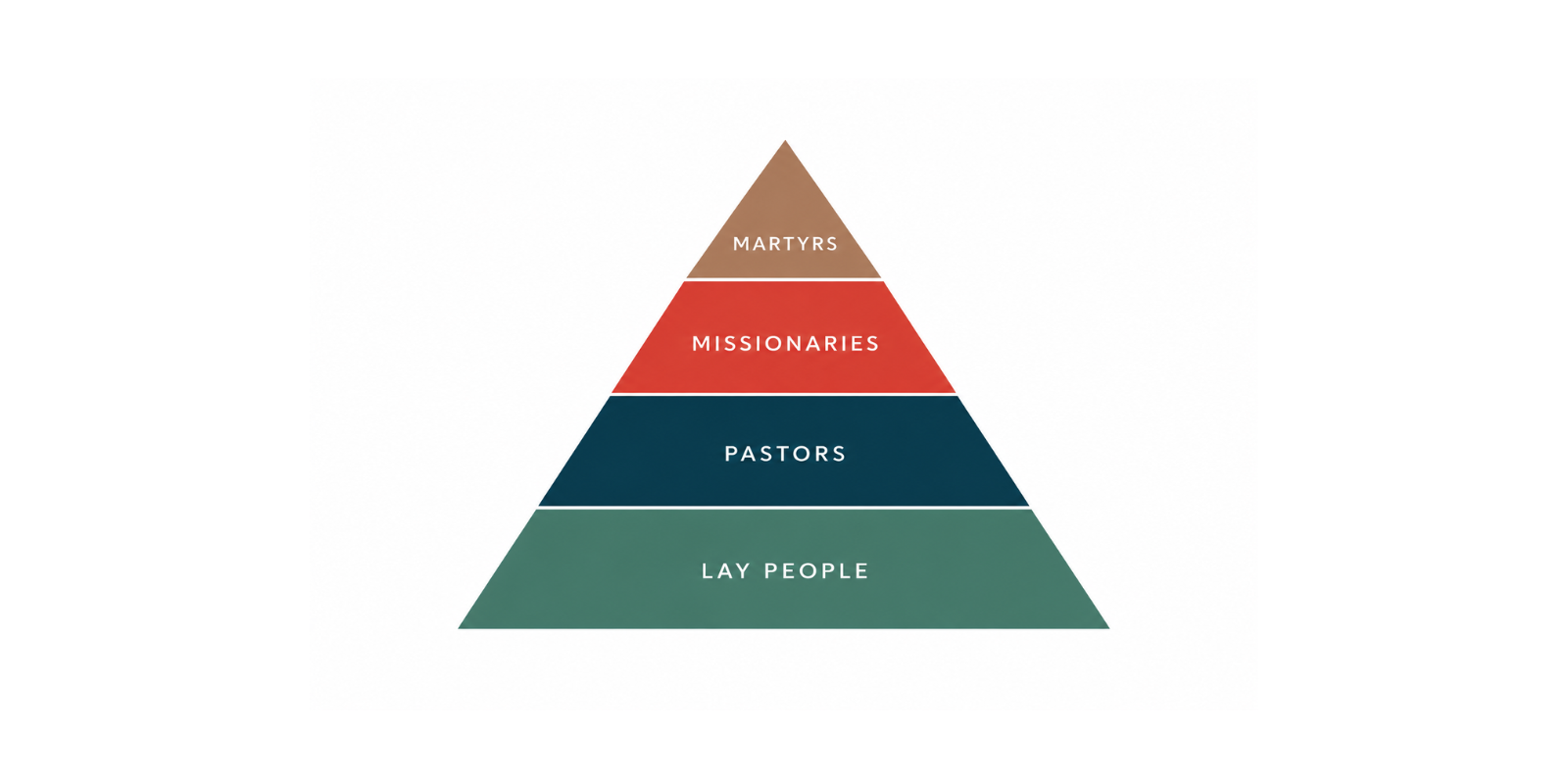
Many Christians unconsciously rank spiritual roles in a hierarchy: ordinary workers at the bottom, full-time ministry workers above them, missionaries higher still, and martyrs at the top. The more one sacrifices, the more spiritually significant one seems.
This reflects a sacred-secular divide: church work is considered eternal, while everything outside the church is treated as worldly or temporary.
But is that how God sees work?
Some products and technologies have only temporary value because they eventually become obsolete. Work that directly serves people and relationships can have lasting significance, such as helping someone know God or restoring a broken marriage. But does that mean everyone should pursue full-time ministry, counseling, or education?
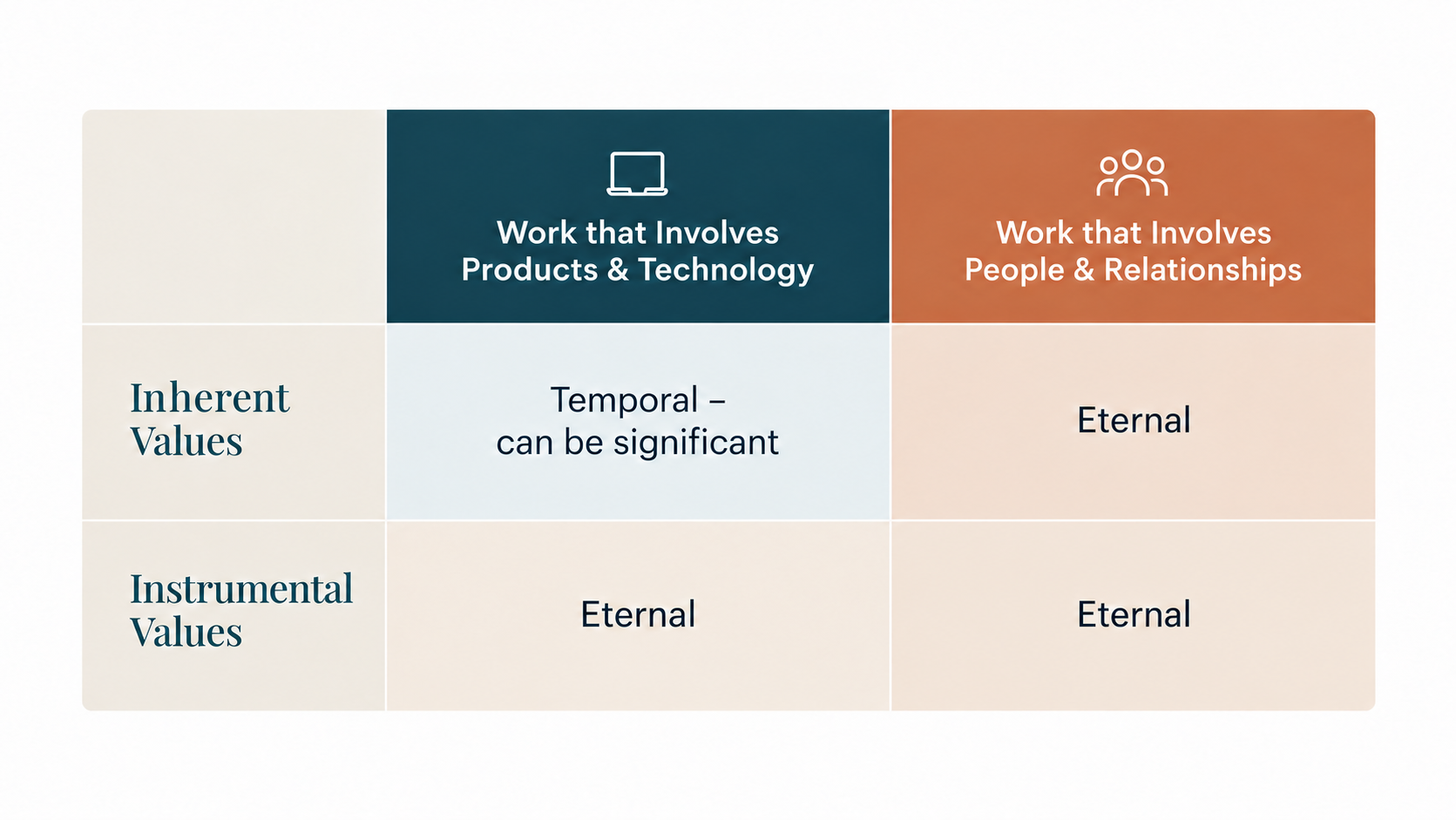
Not at all. Products and technology can also have eternal significance through their impact. Digital communication connects families and helps the gospel reach distant places. Workplace challenges shape our character. The way we work and treat others can earn trust and create opportunities to share our faith.
The intrinsic value of different kinds of work may vary, but all work can have eternal significance in how and why we do it.
Joseph and Daniel served pagan rulers in public office. Through their integrity and excellence, they made God known among the nations. Their careers achieved what Israel, as a chosen nation, had failed to do: make God known beyond its borders.
Work That Fulfills God’s Great Assignment, Commandment, and Commission
Both Calvin and Luther taught that work is a sacred calling from God. This teaching is rooted in Genesis 2, where humanity is commissioned to cultivate and care for creation for human flourishing. Through creativity, reason, and responsibility, we reflect God’s image and fulfill our purpose.
Today, traditional missionaries are barred from entering many countries in the 10/40 Window. Yet professionals can often enter as business executives, engineers, doctors, teachers, and other skilled workers. Through their work, they can serve communities that might otherwise remain beyond the reach of the gospel.
By fulfilling the Great Assignment to steward creation, the Great Commandment to love our neighbors, and the Great Commission to make disciples, we can integrate faith, work, and mission into a coherent life.
Bi-vocational Mission Is Incarnational Mission
Family and work are central to everyday life—and to the stress, struggles, and hopes of people living in emerging economies across the 10/40 Window.
Incarnational mission means more than learning a local language, eating local food, or wearing local clothing. It means sharing people's daily realities, working alongside them, and experiencing the pressures they face. This reflects the example of Jesus, who entered our world and lived among us.
When Christians respond to workplace pressures, difficult relationships, and uncertainty with grace, wisdom, and hope, the gospel becomes visible. People need to see the gospel in action before they are ready to consider its message.
But can bi-vocational workers find time for ministry? While traditional missionaries often have to create opportunities to meet local people, bi-vocational workers interact with colleagues, customers, suppliers, and neighbors daily. Their workplace becomes a natural setting for building trust and demonstrating faith in action.
In many unreached countries, tentmaking may be the only viable entry point. But tentmakers do not replace traditional missionaries. They complement each other. Bi-vocational workers, donor-supported missionaries, and even early retirees can serve as a team, much like elders and deacons alongside pastors. Over 30 years of BVM, we have seen these partnerships advance God's Kingdom.
Bivocational Missions and the Holistic Gospel
Systemic poverty and institutionalized corruption cause immense suffering across many countries in the 10/40 Window. Even in some African countries with Christian majorities, poverty, corruption, injustice, and oppression remain widespread. The church can be like a river, a mile wide but only an inch deep.
Addressing shallow Christianity requires more than evangelism and personal discipleship. The gospel must address not only individual salvation but also the transformation of society. William Carey in India and Timothy Richard in China demonstrated how Christian faith, professional work, and social reform can work together.
Today's missional professionals are called to partner with local believers to bring about redemptive change across business, government, media, education, and the arts and entertainment.
The mission of the 21st-century church is to integrate the Great Assignment, the Great Commandment, and the Great Commission. God is glorified when the gospel transforms the whole person, renews communities, and brings hope to society.
Your career doesn't have to compete with your calling. In God's hands, it can become one of the most powerful ways to live it out.