
Love In The Desert
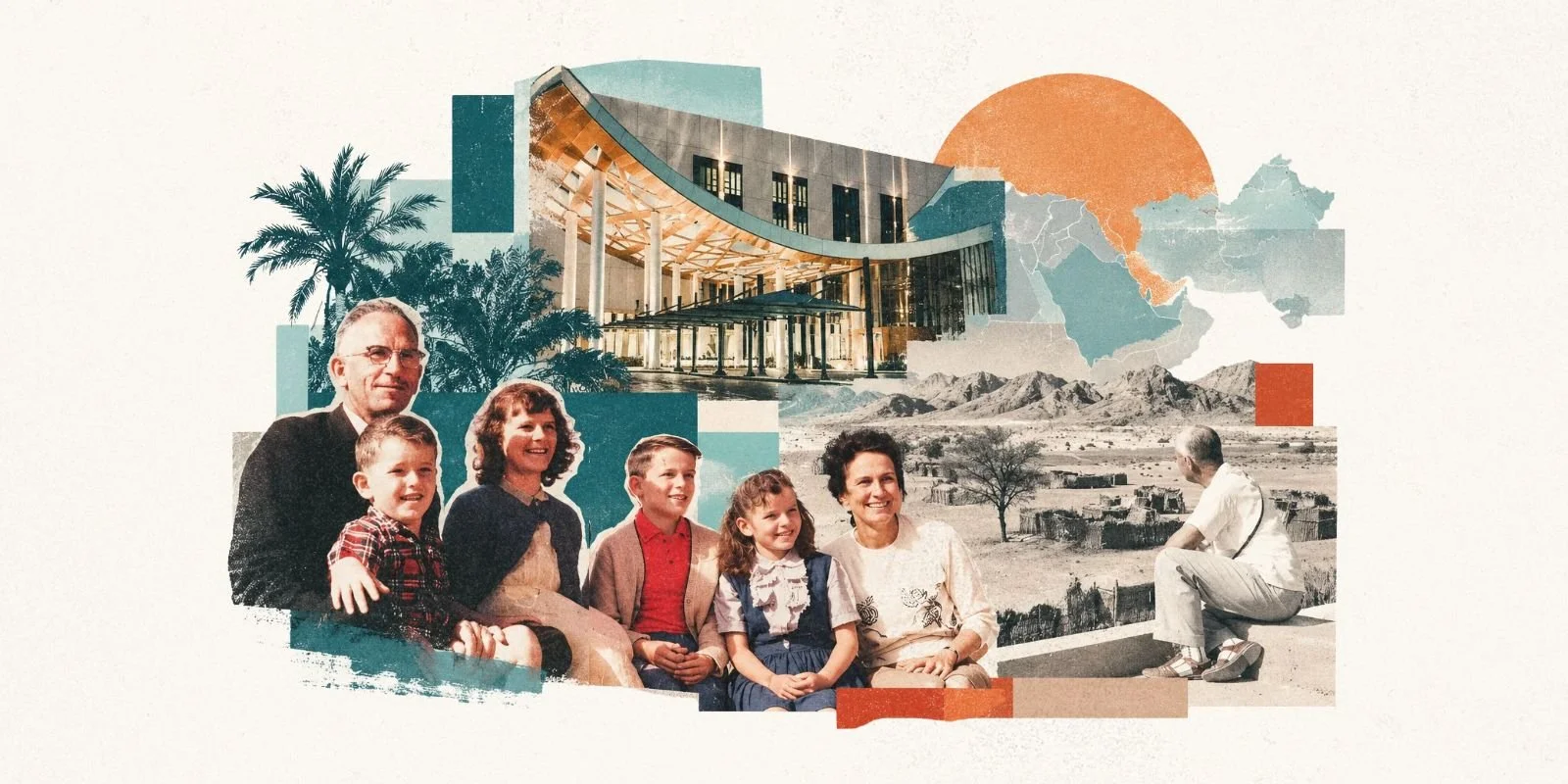
In 1960, when infant and maternal mortality rates were alarmingly high in Abu Dhabi, American physicians Drs. Pat and Marian Kennedy responded to an appeal from local rulers. With their four young children, they moved to the desert oasis of Al Ain to establish the emirate’s first hospital, serving a region where many homes lacked running water.
Torrential rains destroyed their four-room mud-brick hospital in 1963. A subsequent fire destroyed the newly constructed rooms, built with aluminum and palm branches. Yet they persevered.
In 1961, Dr. Marian Kennedy delivered a baby boy who would become Sheikh Mohamed bin Zayed Al Nahyan, the president of today’s United Arab Emirates. Over the years, the hospital delivered 23 children from the royal family, earning a reputation as the birthplace of the nation's leaders.
In 2015, the royal family donated a modern 200-bed hospital. In 2019, the hospital was renamed Kanad Hospital, reflecting the Arabic pronunciation of Kennedy. In 2024, the hospital formed a partnership with Children’s National Hospital in Washington, D.C.
A Legacy Honored by a Nation
In 2025, when Sheik Mohamed welcomed President Trump in Abu Dhabi, he shared his personal story of being born at the hospital founded by two American missionary doctors who are deeply respected in the country’s collective memory for transforming healthcare.
Today, an Arabic Bible is on display in the atrium, with Scripture posted on the walls. The hospital compound houses the Evangelical Church of Al Ain, which provides worship space for an international Christian community.
An old newspaper clipping is displayed in the hospital’s history gallery: “They came before we found oil and gas.”
Kanad Hospital's story is more than the legacy of two remarkable missionaries. It is a testament to generations of Christian professionals whose faith, excellence, compassion, and perseverance have served a nation for more than six decades.
It is the whole gospel in action—God's love made visible through professional service.
The Gospel Made Visible
Some of the world's greatest spiritual needs today are among unreached people groups in emerging economies, where many face poverty, inadequate healthcare, and limited access to education.
Before people are ready to hear about God's love, they often need to see it demonstrated.
The gospel is not merely a message to proclaim. It is also a life to live.
God calls us to live out three inseparable dimensions of our faith: the Great Assignment to steward his creation, the Great Commandment to love our neighbors, and the Great Commission to make disciples of all nations.
Leaving the American Dream
What about Asian American Christians who have been abundantly blessed with education and professional opportunities?
Does God also call people to take risks in their careers for his kingdom?
David came to America from Asia as a young boy. His Christian faith deepened during his teenage and college years. In grad school he began to sense God's call to serve overseas.
His wife shared that commitment. They were blessed with two children, and David joined the faculty of a prestigious university.
He had achieved what many immigrant parents dream for their children: an excellent education, a respected career, financial stability, and a beautiful family.
His parents were understandably proud.
Yet the call to serve overseas never disappeared.
At age 42, after years of exploration, David finally took an opportunity to apply his professional expertise in an Asian country where the gospel could not be freely preached.
The decision meant changing his career path, accepting lower financial prospects, and taking a position that required renewal every two years. After much prayer, they stepped out in faith.
Sixteen Years of Faithful Presence
Eight years later, David's employer required him to relocate to another country.
By then, David and his wife had developed deep relationships within the local Christian community and were actively training Bible study and small-group leaders.
Leaving would mean walking away from a growing ministry.
Once again, they prayed.
An unexpected professional opportunity arose, allowing David to remain in the country. His relationships and professional experience from the previous eight years proved invaluable in his new position.
Over 16 years, David made significant contributions to his field, earning two national awards. In the words of a senior colleague who was not a friend, his work was “legendary” in the field.
Before returning to the United States, he attended a private dinner with government officials who had become his personal friends.
One official told him: "You are truly a servant sent by God to serve our people."
David never became a famous missionary. He simply applied his professional expertise, built lasting relationships, and faithfully served the people God placed around him.
The Privilege of Witnessing Many God Stories
Over the past 35 years, since leaving my medical career to mobilize Christian professionals for cross-cultural service, I have had the privilege of witnessing many stories like David's.
We don't have to choose between serving God and pursuing a meaningful career. Our career can be one of the most powerful ways to serve him.
The question is not "What career will make me successful?"
A far better question is: "God, how can you use my education, career, and life to bless others and make your love known?"
That is the whole gospel at work.