
God At Work in the Muslim World
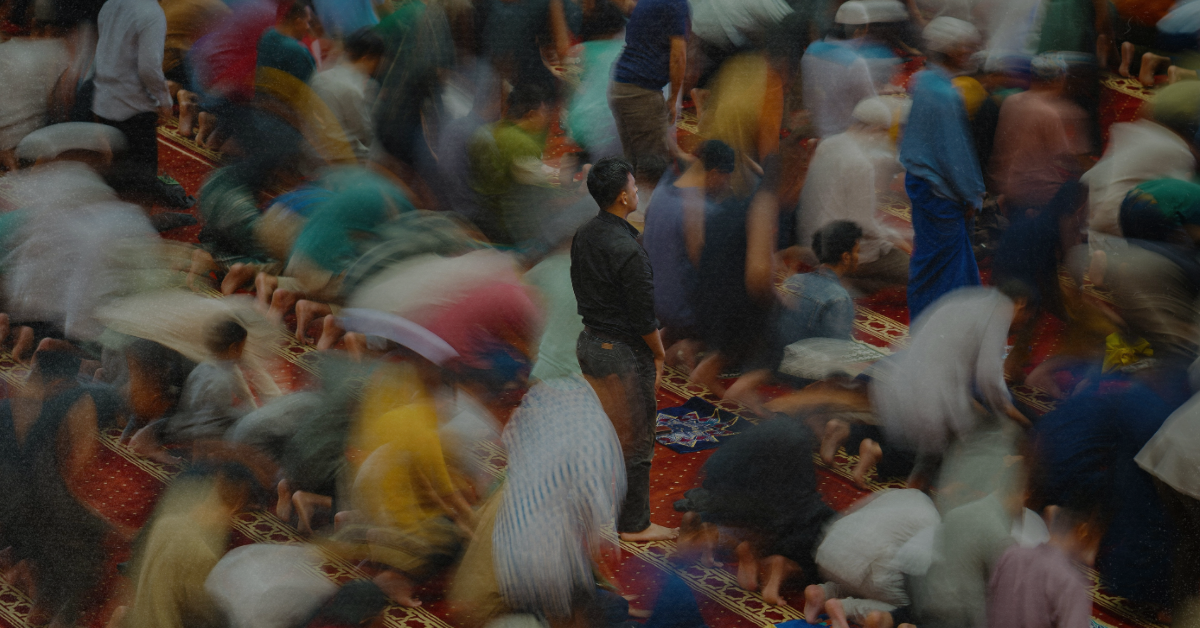
If we follow the news, it is easy to picture the Muslim world as dominated by extremism, sectarian conflict, and terrorism. But it is not a single region with a monolithic culture. Over 50 countries form a global mosaic spanning West Africa, Southeast Asia, the Middle East, and North America. If we flatten two billion people into one mold, we will miss what God is doing among them and fail to pray with clarity or love for our Muslim neighbours with understanding.
A Global Mosaic
Many associate Islam with the Middle East. But only about one in five Muslims lives there. Over half of the world’s Muslims live in South and Southeast Asia (Pakistan, India, Bangladesh & Indonesia), 30% in Africa (e.g. Nigeria and Egypt), with the remainder across the Middle East or West Asia with 17 countries from Turkey to Iran.
Each region has its own history and relationship with Islam. In North Africa and the Middle East, it is central to national identity. In South Asia, it coexists with long Hindu, Sikh, and Buddhist traditions. In Southeast Asia, it blends with local cultures, coexisting with some openness. In Africa, Muslims and Christians live side by side, sometimes in tension, sometimes in cooperation. In Europe and North America, Muslim communities navigate diverse urban and secular environments. Understanding these histories and cultures helps us pray effectively and collaborate with local believers.
Through the Lens of History
For over 1,400 years, Muslims and Christians have interacted as neighbors, trading partners, rivals, and sometimes enemies. Sadly, the crusades left a legacy of mistrust and hostility.
In the last 200 years, with oil discoveries in the Middle East and the fall of the Ottoman Empire after WWI, European colonial powers, primarily British and French, reshaped borders, installed puppet governments, and dominated economies across the Middle East, Africa, and South Asia.
These histories shape how Muslims and Christians see one another. Small Christian communities have existed in the Middle East and Africa since the first century, but for many Muslims, Christianity is associated with a hostile West. Meantime, the West often encounters Islam through headlines rather than friendships. These historical currents influence how people hear the gospel, interpret global events, and understand one another’s intentions.
The Moment We’re In
The Middle East has dominated global headlines—Gaza’s devastation, US-Israeli strikes on Iran, her return fire across the region, and the ongoing tensions at the Strait of Hormuz have shaken the global community.
These crises have created additional challenges for mission workers and local believers. But they also awaken spiritual hunger. Despite restricted access, the gospel continues to reach seekers through digital media, satellite broadcasts, and relationships abroad.
God on the Move
In restrictive countries like Iran and Saudi Arabia, Muslim converts reported dreams and visions of a figure in white light, and instinctively knew it was Jesus. A sheik received a phone number in his sleep that connected him to a pastor. A woman in danger felt deep peace, and later learned that Christians were praying for her neighborhood. Despite the burning of churches and killing of pastors by extreme Islamists, revival continues in Southeast Asia with thousands turning to Christ.
These are not isolated accounts. They reflect a broad, well-documented trend. In recent decades, more Muslims have converted than in any previous era, with more such movements than in the last thousand years. Exact numbers are debated, but the pattern is consistent across regions.
When the 1979 Islamic Revolution seized Iran, only 500 Muslim-background believers were known to exist. After decades of economic hardship, corruption, oppression, and religious policing with scandalous brutality, many Iranians are turning away from state-sponsored Islam. Today, estimates of the number of Christians in Iran range from 500,000 to 1 million. Though exact figures cannot be verified, Iran’s underground church is widely recognized as one the fastest growing in the world.
What You and I Can Do
God is moving across the Muslim world in unprecedented ways. How then shall we pray, give, and reach out?
Reaching the unreached is spiritual warfare: in Daniel 10:13, we read of the prince of Persia resisting God’s messenger for 21 days. Come join our online prayer meeting every second Saturday of the month. Sign up to receive “Minute-A-Day” prayer emails and get more info at prayer@goliveserve.org.
Consider joining short-term projects, such as our IT camps for university students in a small Muslim country in the quieter backwaters of the 10/40 Window. (See p.3)
But the Muslim world is also right here—in our schools, workplaces, workplaces, and neighborhoods. When conflicts abroad cause immigrant families to worry how they are perceived and if their children could go to school safely, we can extend friendship and hospitality in concrete ways.
Several churches in the California Bay Area supported an Afghan church to host an Easter egg hunt and spring picnic for Muslim families in their community. Church and community language exchange programs for new immigrants are always looking for volunteers.